
What is Qualified Production Property?
The short answer
Qualified Production Property (QPP) is nonresidential real property used as an integral part of manufacturing, agricultural production, refining or chemical production. Under IRC Section 168(n), created by the One Big Beautiful Bill Act, taxpayers can elect to deduct up to 100% of its qualifying basis in the first year instead of depreciating it over 39 years.
Bonus depreciation reaches equipment and assets with lives of 20 years or less. QPP reaches the building itself: real property that would otherwise sit in the 39-year bucket but is devoted to production, such as manufacturing floors, QC labs and certain raw material storage.
In February 20, 2026, Treasury and the IRS issued Notice 2026-16, interim guidance on definitions, election mechanics and allocation that taxpayers can rely on until proposed regulations are released. Client projects that were on hold waiting for answers can now move forward.
Refer a Client Project
Our team can discuss the unique needs of your client and determine the best approach to maximize value.
Ready to get started?
Key QPP Rules and Deadlines
-
100%
100%
First-year deduction available on qualifying real property, normally depreciated over 39 years
-
7/4/25 – 1/1/31
7/4/25 – 1/1/31
Placed-in-service window, with construction beginning after January 19, 2025
-
1 YEAR
1 YEAR
Current-year, irrevocable election. It can’t be claimed later through a Form 3115 catch-up
-
10 YEARS
10 YEARS
Recapture period if the property changes use or is sold
How Does QPP Benefit Your Clients?
First-year benefit
Fully deduct qualifying portions of a manufacturing building in the year it’s placed in service.
Reduced risk
Maximize deductions while minimizing risk, with engineering-based support for every allocation.
Early planning
Early discussions help ensure the deduction can actually be used, not stranded in passive activity or NOL limits.
Greater flexibility
Balancing QPP with cost segregation opens more tax planning options, including how much of the allowance to elect.
Which of Your Clients Should You Flag?
Small local firms and large national firms alike will have clients that fit.
Look for:
- New or expanded manufacturing facilities
- Purchases and renovations of existing facilities
- Planned manufacturing changes
- Agricultural, refining and chemical production sites

What Property Qualifies for QPP?
Only real property devoted to the production process qualifies, and only if construction began after January 19, 2025 and the property is placed in service after July 4, 2025 and before January 1, 2031. Personal property still goes through bonus depreciation, so a cost segregation study has to separate it out.
-
CAN QUALIFY
- Nonresidential real property used as an integral part of a qualified production activity
- New construction, or a purchase if the property wasn’t used in production by any person from January 1, 2021 through May 12, 2025
- Raw material storage, when production happens in the same or an integrated facility
- Space for oversight and management of manufacturing, material selection, and development of design specifications
- QC, testing and lab space devoted to production
- Agricultural production: preparing soil, planting, cultivating and harvesting crops; raising and managing livestock
-
DOES NOT QUALIFY
- Offices, administration and research areas not tied to production
- Warehousing, logistics, distribution and finished goods storage
- Property where construction began before January 19, 2025
- Personal property (handled through bonus depreciation instead)
- Property required to use ADS
- Property owned by a lessor and used by a lessee, unless a related-party exception applies
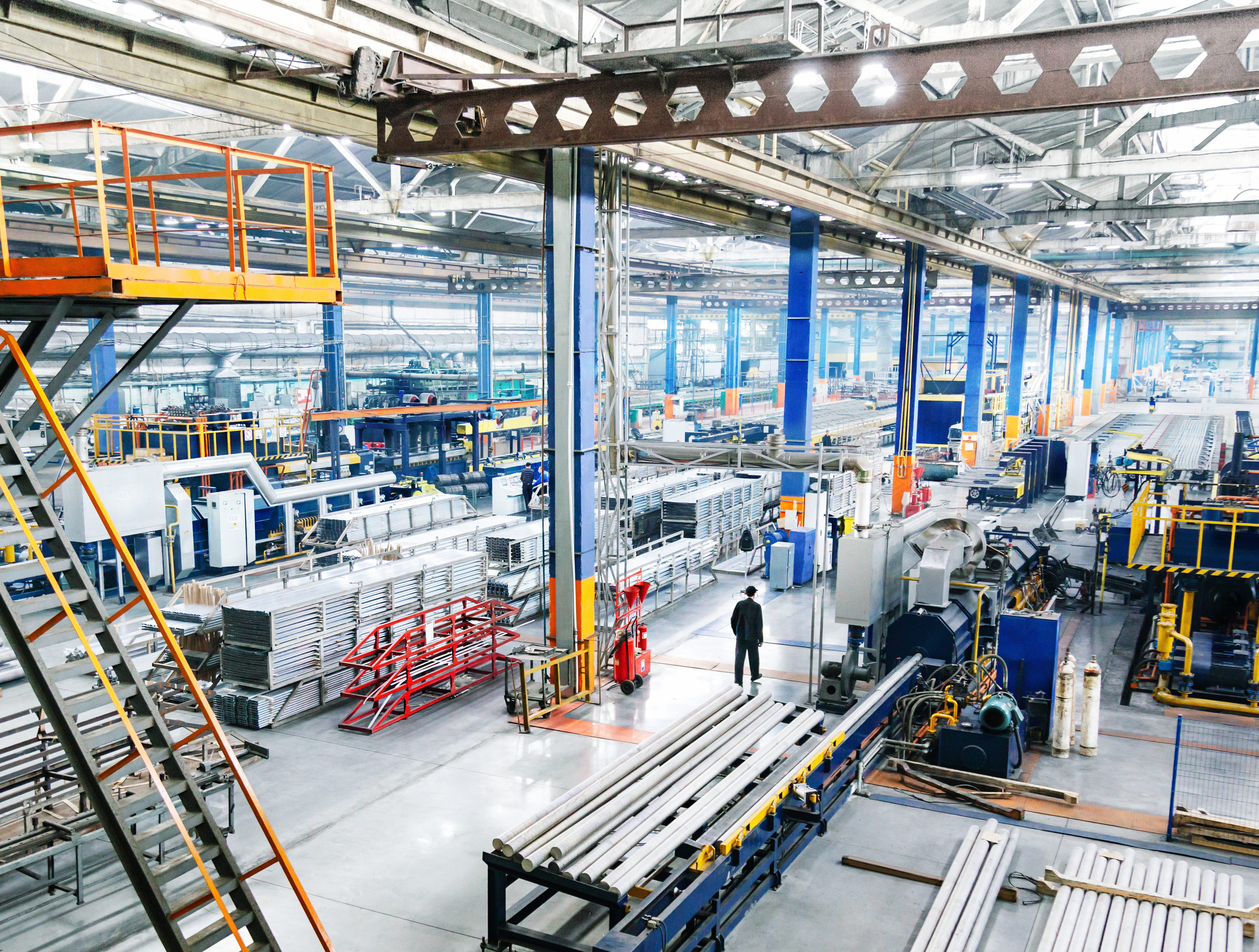
What is "Substantial Transformation"?
Production must produce tangible personal property by materially changing its inputs.
Must
- Materially change the form or function of input materials
- Be distinguishable from the original state
- Be unable to return to the original state
Doesn’t Count on Its Own
- Packaging or repackaging
- Labeling
- Minor assembly
How is QPP Different from Bonus Depreciation?
Bonus depreciation applies to shorter-life assets and is an accounting method. QPP applies to production real property and is a current-year, irrevocable election with its own recapture rules. Most manufacturing projects will use both.
| Qualified Production Property | Bonus Depreciation | |
|---|---|---|
| Applies to | Real property (the building itself) | Assets with a life of 20 years or less |
| Where | Only areas where qualified production occurs | Every property has some eligible assets |
| How it’s claimed | Current-year, irrevocable election under §168(n) | Accounting method; look-back studies possible via Form 3115 |
| Recapture | On a change in use within 10 years, or on sale | On sale only |
What did IRS Notice 2026-16 change?
IRS Notice 2026-16
Issued February 20, 2026, the notice provides interim definitions, election mechanics and allocation rules. Taxpayers can rely on them until proposed regulations are issued.
01
Start of construction
Follows the existing bonus depreciation rules, including a 10% safe harbor. There is no component election.
02
95% de minimis rule
When substantially all of a facility is used in production, it can be treated as qualifying in full.
03
Reasonable allocation
Mixed-use facilities may allocate cost with any reasonable method, and the IRS names cost segregation as one. Headcount and time spent on production are not reasonable methods.
04
Integrated facilities
Buildings on the same or contiguous land can be treated together, so a raw materials warehouse next to production buildings may qualify.
05
Self-rental relief
Exceptions for consolidated groups and commonly controlled pass-throughs (60%/50% ownership tests) help businesses that hold real estate and operations in separate entities.
06
Election mechanics
Elect any amount up to total qualifying basis. Electing QPP treats the taxpayer as electing out of bonus for that same amount, so modeling comes first.
How it stacks
How Do Cost Segregation and QPP Work Together?
Cost segregation finds the first layer of the deduction: personal property and land improvements eligible for bonus. QPP adds a second layer: production real property left in the 39-year bucket. Each still needs a study to value it.
An illustrative $10 million manufacturing build:
$6 million in potential first-year deductions instead of $2 million. Whether the client can use them depends on passive activity rules, NOL limits and other items, such as Section 174 add-backs. We model those with the CPA firm.
Hypothetical figures for illustration only. Actual results depend on the facility, its use and a full engineering-based study.
What Results Have CPA Firms' Clients Seen with QPP?
Case studies
Two client engagements that paired an engineering-based cost segregation study with a QPP analysis, one new build and one purchase and renovation.
Food Processing & Distribution Company
After completing a newly constructed $15M facility, the client engaged McGuire Sponsel for an engineering-based cost segregation study paired with a QPP analysis.
- Reclassified over 25% of depreciable basis into bonus-eligible categories
- An additional 65% of the remaining 39-year assets qualified for QPP
$11MFirst-year deductions realized by combining cost segregation with QPP
Medical Product Manufacturer
Referred by its CPA firm, the client bought and renovated a warehouse for manufacturing, packaging and distribution. Because it holds real estate and operations in separate entities, we prepared separate reports and calculations for each.
- Purchase: $448,918 in first-year tax savings; about $3.6M of real property eligible for QPP
- Renovation: $1,014,175 in first-year tax savings; about $650,000 of QPP-eligible real property
- Separated QIP from QPP, and retained assets from demolished ones
$1,463,093Combined first-year tax savings
$4.25M
Real property identified for QPP
Why CPA Firms Partner with McGuire Sponsel
We work as an extension of your firm, never in competition with it. You stay at the center of the client relationship; we bring the engineering and QPP expertise and deliver the study, the allocation support and the deduction modeling your team needs for the return.
Pairing a cost segregation study with a QPP analysis captures both bonus-eligible and QPP-eligible components. Because QPP is a current-year election, bringing us in early leaves time to plan before the return is filed.
QPP Questions CPAs Ask Most
Who is eligible for the QPP deduction?
Taxpayers that own nonresidential real property used as an integral part of a qualified production activity: manufacturing, agricultural production, refining or chemical production that substantially transforms tangible personal property. Generally, the owner must also be the user, subject to the related-party exceptions in Notice 2026-16.
What are the key QPP dates?
Construction must begin after January 19, 2025, and the property must be placed in service after July 4, 2025 and before January 1, 2031. Purchased property qualifies only if no one used it in production between January 1, 2021 and May 12, 2025.
Can a client claim QPP retroactively with Form 3115?
No. QPP is a current-year, irrevocable election made on the return for the year the property is placed in service. Unlike a cost segregation look-back study, it can’t be picked up later through a change in accounting method.
Does the whole building qualify?
Usually not. Only production areas qualify; offices, finished goods storage and distribution space do not. If at least 95% of the facility is used in production, the de minimis rule lets the whole facility be treated as qualifying.
Do clients still need a cost segregation study?
Yes. Only real property qualifies for QPP, so personal property has to be separated out, and mixed-use facilities need a reasonable allocation method. Notice 2026-16 names cost segregation as one such method.
What if a client holds the building in a separate entity?
Leased property generally doesn’t qualify, but Notice 2026-16 excepts consolidated groups and commonly controlled pass-throughs: the lessee is 60% or more owned by the same person or group that owns 50% or more of the lessor. Watch for passive loss limits and ADS issues from real property trade or business elections.
Can a client elect less than 100%?
Yes. The client can elect any amount up to total qualifying basis. Electing QPP is treated as electing out of bonus depreciation for the same amount, so model whether QPP, bonus, QIP or Section 179 serves the client better.
When is QPP recaptured?
If the property stops being used in a qualified production activity within 10 years, or is sold. Bonus depreciation, by contrast, is recaptured only on sale.
Go Deeper on Notice 2026-16
-
 podcastsFixed Asset ServicesMay 16, 2026
From Bonus Depreciation to QPP: Planning Opportunities Under OBBBA
by Dave McGuire & Mike Hammel, MAccNew depreciation rules are creating major planning opportunities — and potential pitfalls — for CPA firms and manufacturers.
-
 white papersFixed Asset ServicesFebruary 27, 2026
Qualified Production Property FAQs
by Dave McGuireDownload McGuire Sponsel’s Qualified Production Property (QPP) FAQ Guide for expert insights on IRS Notice 2026-16, QPP eligibility, depreciation elections,...
-
 webinarsFixed Asset ServicesFebruary 25, 2026
Overview of Qualified Production Property Guidance Under IRS Notice 2026-16
by Dave McGuireThe Internal Revenue Service recently released IRS Notice 2026-16, providing long-awaited clarity on Qualified Production Property (QPP) under §168(n).
-
 blogFixed Asset ServicesFebruary 24, 2026
IRS Interim Guidance on Qualified Production Property (Notice 2026-16)
by Dave McGuireOn February 20th, the IRS released Notice 2026-16, which clarifies Qualified Production Property depreciation elections, timing, and reliance rules. ...
Have a client building, buying or expanding a facility?
Because the QPP election has to be made in the year the property is placed in service, timing matters. Tell us about your client’s project. We’ll assess eligibility and model the deduction with your team before the return is filed.
Call us at +1-800-322-7776 or fill out the form below.