
Property tax is fraught with complexities, particularly in distinguishing between real property tax and personal property tax. While real property tax is based on the assessed value of buildings, personal property tax encompasses machinery, equipment, furniture, and other movable assets. Addressing both types of property tax is crucial for comprehensive tax planning.
McGuire Sponsel has helped many clients understand the benefits of our property tax services. Through these experiences, we recognized the importance of answering some of the most frequently asked questions for the rest of the CPA industry. Often, people are overpaying property tax bills.
Dave McGuire joined Casey Peterson’s Generally Accepted Accounting Podcast (GAAP) to discuss cost segregation and depreciation.
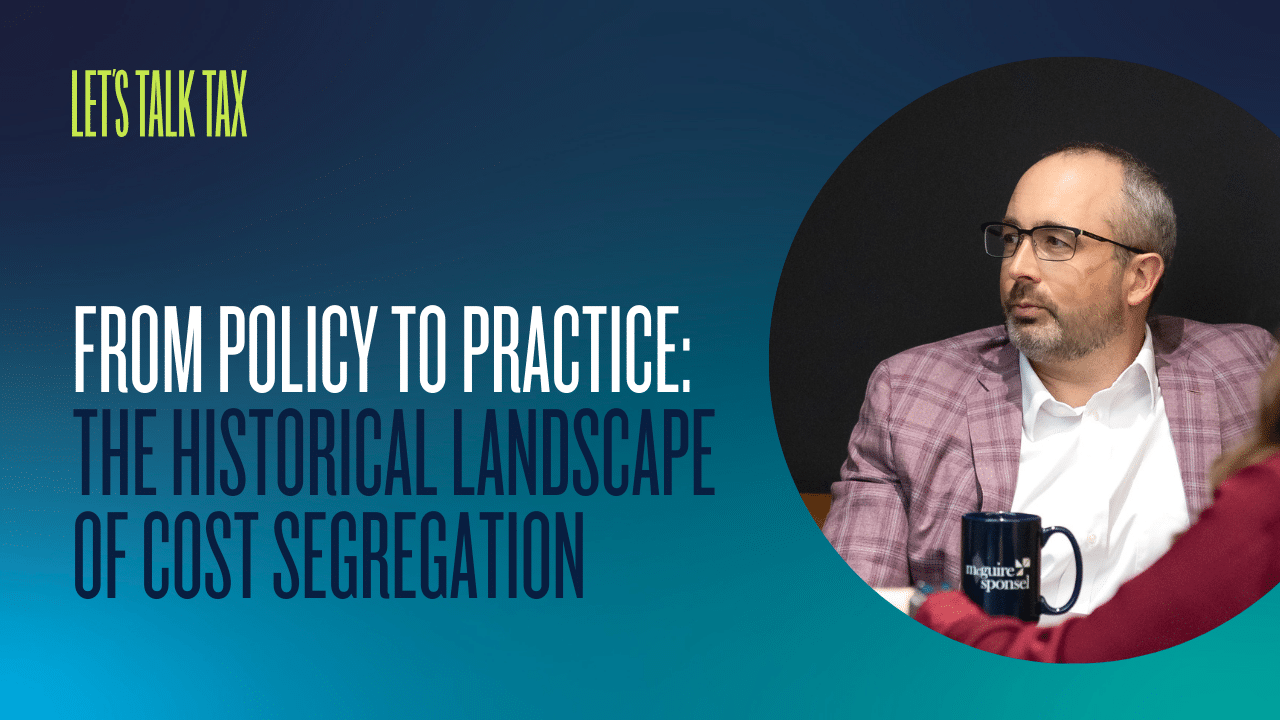
In this episode of Let’s Talk Tax, host Tim LeMasters discusses the history and intricacies of cost segregation with expert Dave McGuire.
In his latest piece in Accounting Today, Dave McGuire discusses the upcoming presidential election and the potential impacts on tax policy.
The Inflation Reduction Act of 2022 has been a windfall for many businesses, including those looking to upgrade their facilities for energy efficiency or adding solar panels. Unfortunately, the implementation of these incentives has caused much confusion. During this webinar, McGuire Sponsel’s Dave McGuire will review 179D, 45L, Section 48 credits, and other provisions.
McGuire Sponsel was contacted by a CPA firm to conduct a cost segregation study for a recently purchased auto dealership in Colorado.
McGuire Sponsel was contacted by a CPA firm to conduct a cost segregation study for a recently purchased and renovated multi-tenant office building located in Lexington, Kentucky.
Last year, many areas of specialty tax were held in limbo. The uncertainty around 174, bonus depreciation, and 163(j) has created heartburn for both taxpayers and their advisors. With many provisions of the TCJA expiring, it is expected that taxes will be on the docket regardless of who wins the upcoming election. In this webinar, we discuss the tax policies of both the Harris/Walz and Trump/Vance tickets and how they could affect specialty tax.
McGuire Sponsel was contacted by a CPA firm to conduct a cost segregation study for a newly constructed food manufacturing facility located in Jefferson, Georgia.
Real vs. Personal Property Tax Explained
Property tax is fraught with complexities, particularly in distinguishing between real property tax and personal property tax. While real property tax is based on the assessed value of buildings, personal property tax encompasses machinery, equipment, furniture, and other movable assets. Addressing both types of property tax is crucial for comprehensive tax planning.
Key Areas of Focus
Expanding the focus beyond real property tax is essential. Real property tax is straightforward, but personal property tax often gets overlooked. This type of tax includes any removable assets and can lead to significant savings when properly assessed and managed.
Industries Affected by Property Tax
Asset-heavy industries like manufacturing and healthcare can benefit considerably from reviewing their personal property tax assessments. Manufacturing often sees overvalued personal property because initial assessments may not fully account for wear and tear on machinery. Similarly, hospitals frequently deal with ghost assets—disposed items still appearing on records. Correcting these assessments can result in substantial tax savings.
The Appeals Process
The time and effort involved in the appeals process often concern clients. Efficient procedures can minimize client involvement while maximizing outcomes. For personal property reviews, only the previous year’s fixed asset and personal property returns are required. Depending on the property’s value, an onsite inspection might be necessary. Real property assessments start with basic details such as the property address and any available appraisals.
Misconceptions in Real Property Tax
A common misconception is the fear that appealing an assessment could increase property value. This scenario is extremely rare and usually only occurs due to significant errors in the assessment. Understanding the unique deadlines for each county is crucial, as appeal deadlines can vary significantly. Generally, the process takes about three to four months.
Strategies for Successful Appeals
Three primary methods are employed to justify lowering an assessment:
- Cost Method: Evaluating the replacement costs of the property.
- Market Approach: Comparing sales of similar properties in the area.
- Income Approach: Assessing the revenue generated by the property, including rent, vacancies, and maintenance costs.
Client Benefits and Contingency Fees
A successful appeal typically results in a reduction in property tax assessments, averaging between 15-25%, with some cases seeing reductions as high as 50%. Out-of-pocket costs are minimal, usually limited to filing fees or necessary appraisals, with clients being consulted before any significant expenses are incurred.
Navigating Administrative Challenges and Deadlines
Understanding and adhering to administrative requirements and deadlines are critical for successful appeals. These requirements vary significantly between counties, making professional expertise invaluable. Missing minute administrative details can jeopardize the success of an appeal, emphasizing the need for a thorough knowledge of each jurisdiction’s rules.
A well-handled property tax appeal process can have a profound impact. Leveraging professional expertise can secure considerable tax savings, driving financial benefits for clients. Staying informed and proactive in tax assessments and appeals is essential.
-

Rebecca Patterson, Realtor®

Rebecca Patterson is a Tax Consultant on McGuire Sponsel’s Property Tax Services team.
Recent Resources
-
 in the newsFixed Asset ServicesOctober 9, 2024
Podcast: Fixed Assets and Cost Segregation
by Dave McGuireDave McGuire joined Casey Peterson’s Generally Accepted Accounting Podcast (GAAP) to discuss cost segregation and depreciation.
-
 podcastsFixed Asset ServicesOctober 3, 2024
From Policy to Practice: The Historical Landscape of Cost Segregation
by Tim LeMasters & Dave McGuireIn this episode of Let’s Talk Tax, host Tim LeMasters discusses the history and intricacies of cost segregation with expert...
-
in the newsAlliance NetworkOctober 1, 2024
Tax Planning as the Election Nears
by Dave McGuireIn his latest piece in Accounting Today, Dave McGuire discusses the upcoming presidential election and the potential impacts on tax...
-
 case studiesFixed Asset ServicesSeptember 19, 2024
Food Manufacturing Facility
by Dave McGuireMcGuire Sponsel was contacted by a CPA firm to conduct a cost segregation study for a newly constructed food manufacturing...